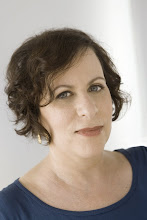
Michael Itkoff
 is the editor of
Daylight Magazine which publishes in-depth photographic essays on important issues of the day. It is a part of
Daylight Community Arts Foundation (DCAF), a non-profit organization that collaborates with established and emerging artists to re-imagine the use of documentary work.
I met
Michael over a year ago and was fascinated by the work he is doing with
Daylight, and with his own personal photography.
Give us a little of your background and how you came to photographyI remember going to see a 76ers game at the old Spectrum arena when I was about ten years old. As the players were warming up I snuck down to the courtside and stood behind Bill Cosbys' chair. When
David Robinson (of the Spurs) jogged by I yelled 'Hey Davey' and held my plastic lens
Vivitar to my eye. Robinson looked up and waved as I snapped the picture. I was ecstatic! A few years later I was unable to sleep one night so I picked up a camera and ended up shooting a bunch of rolls of stuff in my room. That night I became obsessed with the latent image, waiting to see what I had captured and trying to play with my perception and the limits of representation. Most images failed but it was the process that was important.
I ended up studying photography through High School and photographed extensively during a gap year when I traveled through Israel and Europe. At
Sarah Lawrence College I was lucky enough to study with
Joel Sternfeld who became an important influence and mentor.
Whose work do you admire/follow?There are so many photographers I could name here but
Brian Ulrich,
Tim Davis,
Brenda Ann Kenneally,
Teru Kuwayama come to mind...
Tell us about starting Daylight and DCAF Daylight
 was started out of a frustration with the lack of outlets for emerging photographers. My senior year at SLC I teamed up with
Taj Forer and began what was intended to be a serial publication featuring our work along with folks we admired. When
Alec Soth agreed to be involved (in November 2003) we knew we should pull our work out and make it a purely curatorial effort. We started a non-profit organization,
Daylight Community Arts Foundation, and published the first edition in time for the 2004
Whitney Biennial where the edition sold out.
How do you choose your subject matter and your photographers?This is my favorite aspect of what Taj and I do. There are so many things I am interested in and
Daylight is an amazing way to study and learn about the world. Based on our interests Taj and I pick a theme and research which photographers have worked along those lines. Our printing schedule is quite slow due to a number of factors so it allows us the time to really dig in and find a diverse group of photogs that collectively illustrate a subject. Taj and I will bounce news articles, essays and websites back and forth, attend openings and art fairs and generally keep our eyes and ears peeled for relevant information and potential artists.
How important is it for photographers to be able to write about their work?Daylight serves as an independent platform for photographers portfolios and we encourage the photographers to write their own opening statements. Although photography is a depictive, non-textual form of communication it remains a tool of expression that can be greatly enhanced by the written insights of the artist. While I do believe an image should be able to stand on its own, there is no doubt that the context within which an image is displayed will greatly affect its reading. The various permutations of text and image relationships will continue to evolve indefinitely so exploring this terrain is important for any image maker.
What should photographers know about submitting their work to Daylight?We have an open submission policy but require the purchase of an issue of the magazine in lieu of a submission fee. Generally we prefer a link to a website along with a statement and CV.
Is your project “Street Photographs” still on-going? Street Portraits
 is a project that I have laid to rest for now but I could very easily pick it up again at any time. My recent monograph (
Street Portraits, Charta Editions, 2009) provided a certain amount of closure for the project.
There are so few women in the book, how come?
Street Portraits arose after I spent a summer interning for
Annie Leibovitz. Working with celebrities in studios for three months, I developed a great desire to go out and photograph everyday people in the streets. I traveled to five cities around the world for the project, often alone, and found that in each place I would often identify with other men in the city, like 'that might be me if I was born here' or 'that could be my life'.
The project was a bit quixotic, looking at humanity as a whole and perceiving us all as members of an extended family. With this notion in my head I began to identify with people I encountered in the streets and tried to picture my life as theirs and the identification simply happened more often with other men.
People say Photojournalism is dead, and yet on the cover of Daylight, it says “Documentary Photography.” Obviously you don’t subscribe to that belief. Talk about why not, and what it means to you.
The photo industry may be changing thanks to the democratization of imaging and communication technology but there will always be a need for professional photographic depiction of events. I am incredibly thankful for and excited by the complementary coverage we have received over the last couple of years with Iranian, Burmese and Egyptian dissent (to take just three examples) being recorded and shared via the internet. This does not eliminate the need for professional photojournalists and documentarians who pursue in-depth stories with technical proficiency and a bit more objectivity than those involved in the scenarios themselves.
Although there has been a vibrant, and valid, critique on the veracity of the documentary photograph as objective evidence it remains important for individuals from within and without a given context to bare witness, share their stories and participate in the global visual dialogue.
Daylight seeks to embrace this gray area and further explore the territory between straight depiction and personal truth.
Do you think photographers need to blog? Do you read blogs? If so, which ones?Blogging is one tool among many that photographers can use to further communicate and engender a sort of repeat audience, fan base or clientele. As with any tool I think each photographer first needs to visualize a goal and see if blogging is a way to achieve what they want.
When I have time I do read blogs via an aggregator and I sometimes search them for relevant content for
Daylight. Among my favorites are
A Photo Editor,
Verve, and
Resolve. On that note the
Daylight Daily blog is looking for contributors willing to regularly review exhibitions books and miscellany as well.
Michael Itkoff's reception for his MFA show
Michael Itkoff: Each + EveryFriday Feb. 26th, 6-10pm
On View Saturday Feb. 27th 12-5pm
24-20 Jackson Avenue, 3rd FLoor
Long Island City, Queens
Labels: a photo editor, brian ulrich, daylight magazine, documentary photography, joel sternfeld, michael itkoff, resolve, stella kramer, stellazine, verve photo